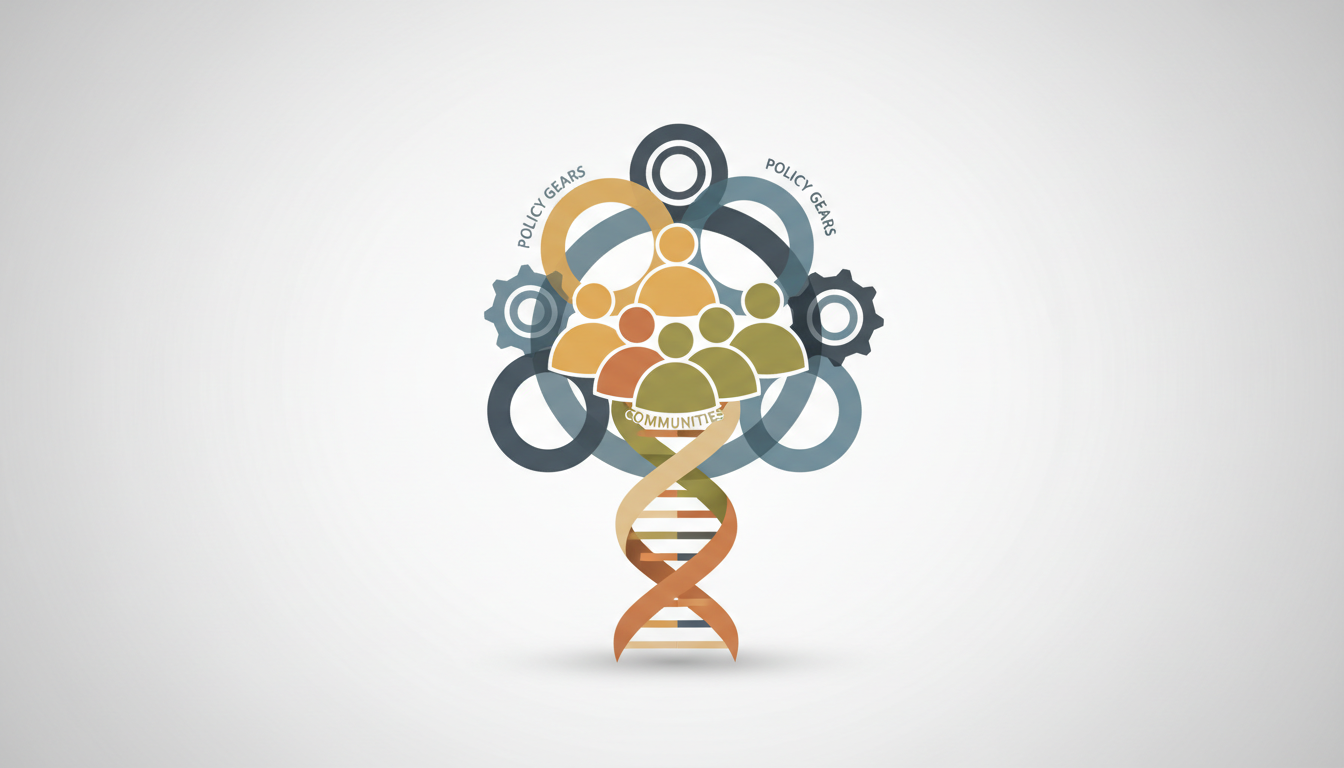
Longevity News Is Shifting From “Biohacks” to Systems, Social, and Gene Tools
The next decade of longevity progress will come less from single supplements and more from stacking small, boring risk reductions across biology, behavior, and policy, while selectively using powerful new tools like genome editing where the evidence is strongest.
Why it matters: Longevity is not one intervention, it is a portfolio. The 2024 to 2025 conversation is getting clearer about what actually scales, what is measurable, and what is still mostly narrative. If you want more years that feel good, your biggest wins are still in preventing chronic disease, maintaining function, and protecting mental health, not chasing one “master switch.”
The evidence:
- Aging is multi-causal, not linear. A high-citation 2023 landscape review by Tenchov, Sasso, Wang, et al. in ACS Chemical Neuroscience frames aging as a time-dependent accumulation of damage across interconnected hallmarks, which helps explain why single-target fixes often underdeliver in real humans (Tenchov et al., 2023).
- Population aging is becoming a public health stress test. A 2024 review in Public Health Challenges (Khan, Addo, Findlay) argues that longer lifespans without parallel gains in healthspan increase burden from multimorbidity, disability, and care needs, shifting “longevity” from a personal project to a systems problem (Khan et al., 2024).
- Healthy aging is increasingly treated as a public health intervention set. A 2025 paper in Aging Clinical and Experimental Research (Gianfredi et al.) emphasizes prevention, environments that support function, and equity as core levers, not add-ons (Gianfredi et al., 2025).
- Loneliness is not a soft variable, it is a depression risk amplifier. A 2024 Lancet Healthy Longevity analysis across 24 countries found that social activities and loneliness help explain how socioeconomic status links to depressive symptoms in adults 50+, meaning connection is a modifiable pathway, not just a correlate (Wang et al., 2024).
- CRISPR is moving from “science story” to real-world leverage, but still narrow. Doudna and Wang’s 2023 Science review describes how genome editing is becoming more predictable and actionable, but the practical near-term wins are mainly in specific genetic diseases, not generalized “anti-aging” (Wang and Doudna, 2023).
What to do: Pick a 3-layer longevity stack you can repeat for years: (1) reduce chronic disease risk with sleep, movement, and nutrition fundamentals, (2) treat social connection like a protective factor you schedule, (3) use medical care strategically, prioritize prevention and evidence-based screening, and avoid chasing single-hallmark miracle claims.
The counterpoint: If you already have excellent fundamentals, the marginal gains from “more optimization” shrink, and the highest ROI may shift to environment, relationships, and adherence, not new gadgets or protocols.