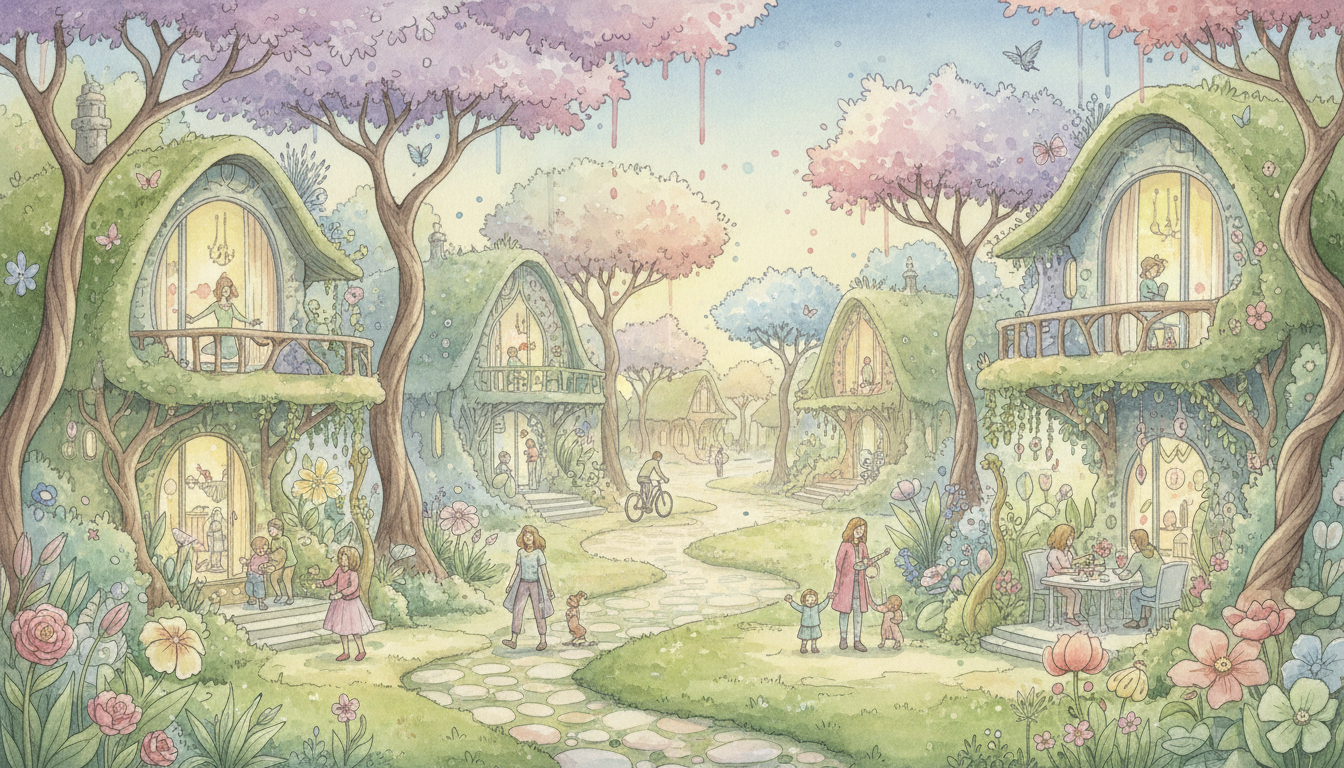
Longevity Is a Neighborhood Effect: The Community Inputs That Quietly Add Years
The Problem
You can train, track your sleep, eat “clean”, and still feel like your health is one bad week away from sliding backward. You do the right things, but your environment keeps pulling you off course. The sidewalk is unsafe, the commute steals your daylight, the grocery options are thin, and your social circle is scattered. Your plan depends on willpower, and willpower has a half-life.
What makes this especially frustrating is that the advice you get is often hyper-individual. More steps. More protein. More discipline. But your daily defaults are not just your choices, they are the choices your surroundings make easy. If your community makes movement inconvenient, connection rare, and stress constant, your “healthy lifestyle” becomes a part-time job.
You are not imagining it. For many people, the barrier to a longer, healthier life is not knowledge. It is friction. And friction is often built into the place you live.
Why It’s Harder Than You Think
Most longevity conversations focus on biology as if it lives in a vacuum. But your biology is continuously taking votes from your social and environmental inputs, and those votes show up as inflammation, sleep depth, blood pressure, glucose control, and mood. When those inputs are chronically misaligned, the body shifts into a defensive posture: higher stress hormones, worse metabolic flexibility, and more oxidative stress.
That matters because oxidative stress is not just a buzzword. A 2023 review in Antioxidants (Maldonado, Morales, Urbina, et al.) describes oxidative stress as a cross-cutting contributor to multiple hallmarks of aging, including mitochondrial dysfunction, genomic instability, and loss of proteostasis. You cannot “supplement” your way out of an environment that repeatedly triggers threat physiology.
There is another hidden trap: we tend to treat aging as something you only notice when disease shows up. But aging is measurable long before symptoms. A 2023 paper in Nature Aging (Lu, Fei, Haghani, et al.) advanced pan-mammalian epigenetic clocks, showing that biological age can be estimated across tissues with high accuracy using DNA methylation patterns. Translation for real life: your body is keeping a molecular log of your exposures and behaviors, including the ones you did not choose.
The stakes are not only lifespan. They are healthspan. If your community erodes your sleep, movement, and social connection for decades, the cost is often paid as earlier disability, more years on medications, and a narrower life.
What the Science Suggests
The Greengross lecture theme, that communities shape long lives, lands because it matches how biology actually works. Your environment influences longevity through a handful of mechanisms that are both measurable and modifiable.
1) Communities change your stress biology, and stress biology accelerates aging pathways
Social isolation, neighborhood disorder, noise, and chronic time pressure increase sympathetic activation and reduce recovery. This can raise oxidative stress and inflammatory signaling, which ties directly into aging hallmarks described in the 2023 Antioxidants review. The key point is not that stress is “bad”, it is that unresolved stress becomes a chronic cellular signal.
2) Communities shape your exposure profile, and your cells record exposures
Epigenetic clocks (Lu et al., 2023, Nature Aging) are compelling because they reflect the cumulative effect of inputs over time. You cannot directly read “community” from methylation, but you can understand the implication: the body integrates environment. If your neighborhood increases sedentary time, reduces sleep quality, and raises baseline stress, those exposures can plausibly shift biological aging trajectories.
3) Communities set the default behaviors that drive metabolic and vascular resilience
The most effective “interventions” are often not new hacks, they are default conditions: safe walking routes, access to minimally processed foods, and social norms that support movement and shared meals. These change energy balance, glucose variability, and blood pressure without requiring constant self-control.
4) The future of longevity will combine biology tools with community design
CRISPR is a reminder of where medicine is going. A 2023 review in Science by Joy Y. Wang and Jennifer Doudna describes how genome editing is making disease susceptibilities more predictable and actionable. That is powerful, but it also highlights a gap: even if your genetic risk is known, your environment still determines whether that risk is expressed. Precision medicine will work best when paired with precision public health, meaning communities engineered to reduce harmful exposures and increase protective ones.
This is the pivot: longevity is not only something you pursue in a clinic or gym. It is something your community either supports or sabotages, every day, through stress load, exposure load, and behavior defaults.
A Path Forward
You do not need a perfect city to get community-level gains. You need a few interventions that reduce friction and increase repeatable, pro-health defaults. Think in terms of systems, not inspiration.
Community interventions that map to longevity mechanisms
-
Build “movement corridors,” not just parks
- Goal: make walking and cycling feel safe and automatic.
- Mechanism: increases daily low-intensity activity, improves glucose handling, lowers blood pressure, supports mitochondrial function through regular energy demand.
- Practical moves: protected bike lanes near schools, continuous sidewalks, traffic calming, lighting, benches for older adults.
-
Create third places that make connection routine
- Goal: reduce isolation without requiring “social planning.”
- Mechanism: social connection buffers stress physiology, improves adherence to healthy behaviors, and supports cognitive resilience.
- Practical moves: community centers with free classes, libraries with evening programming, intergenerational spaces, walking clubs that meet at consistent times.
-
Treat noise and light as health exposures
- Goal: protect sleep depth and circadian stability.
- Mechanism: better sleep reduces stress reactivity and supports metabolic and immune regulation.
- Practical moves: quiet zones near housing, tree buffers, enforcement of nighttime noise, shielded street lighting, building codes that reduce light intrusion.
-
Upgrade food access by changing defaults, not educating harder
- Goal: make minimally processed options the easy option.
- Mechanism: stabilizes glucose and lipids, reduces inflammatory burden, supports vascular aging.
- Practical moves: incentives for grocers in food deserts, mobile markets, healthy corner-store standards, zoning that limits density of ultra-processed fast food near schools.
-
Design “micro-recovery” into the day
- Goal: lower chronic stress load at scale.
- Mechanism: frequent downshifts reduce cumulative sympathetic activation and oxidative stress signaling.
- Practical moves: shaded green routes, pocket parks, workplace policies that protect breaks, community norms around after-hours messaging.
What you can do this month, even if you cannot change your city
- Join or start a recurring group (walk, strength training, cooking night). Frequency beats intensity.
- Audit your friction: identify the one environmental barrier that breaks your routine (unsafe route, late-night noise, lack of nearby food options), then choose the simplest workaround that reduces it.
- Advocate for one local change with high leverage (crosswalk, lighting, sidewalk repair). Small infrastructure can produce daily behavior change for thousands of people.
Individual variation matters, and not every intervention fits every community. But the principle holds: reduce friction for movement, protect sleep, and make connection normal.
The Bottom Line
Healthspan is not only built from biomarkers and biohacks. It is built from repeatable daily inputs, and communities control more of those inputs than most people realize. The most practical longevity upgrade is often not a new supplement or test, it is a neighborhood that makes the right behaviors easier, lowers chronic stress, and supports recovery. When your environment stops fighting your biology, your “plan” becomes your default, and that is where long life actually comes from.