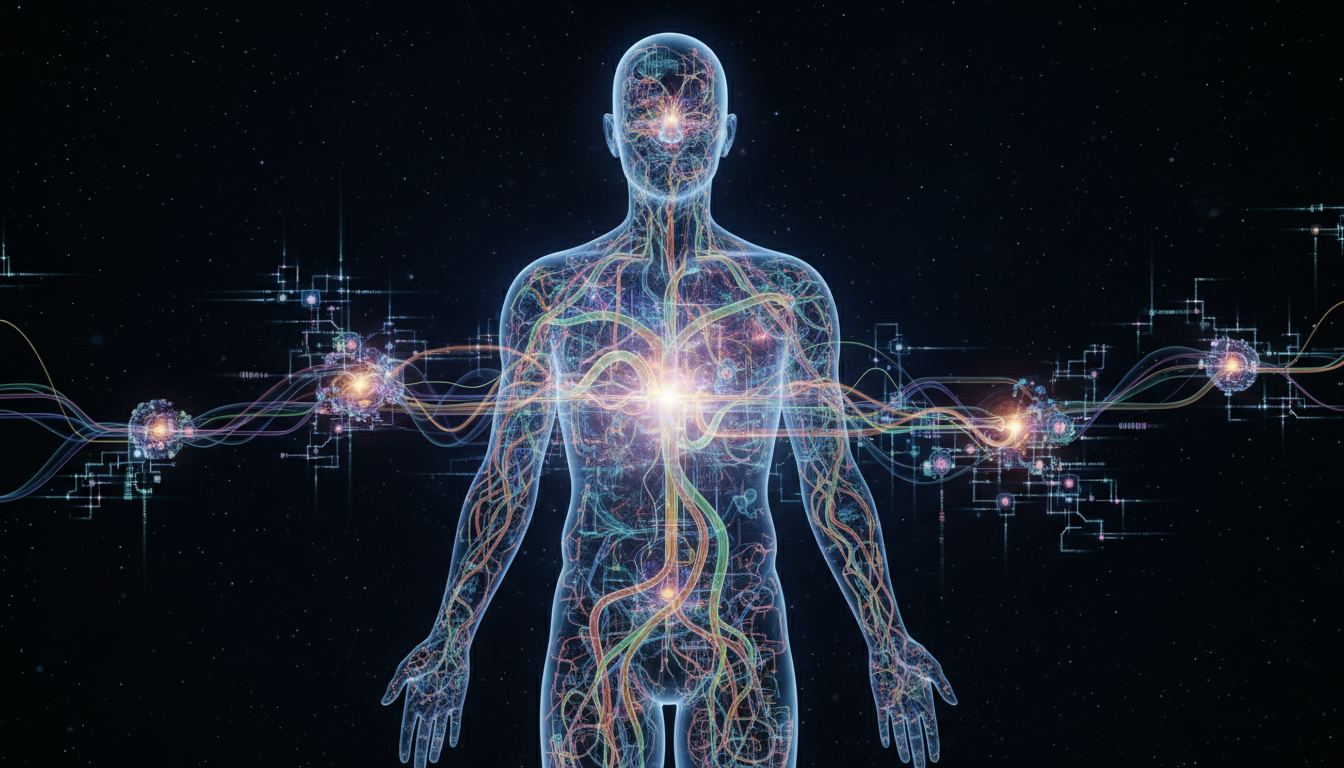
Healthy Aging Is a Systems Strategy, Not a Single Breakthrough
The Reality
The latest aging research points to a clear practical truth: healthy aging is not one pathway to hack, but a set of biological systems to preserve, measure, and stress-test over time. The 2024-2025 direction in longevity science is moving away from vague “anti-aging” claims and toward measurable biology, including epigenetic clocks, cellular senescence, mitochondrial function, inflammation, genome stability, proteostasis, and neural network integrity.
Aging is increasingly understood as a loss of resilience. Cells accumulate damage, tissues lose repair capacity, immune signaling becomes noisier, and the brain becomes more vulnerable to metabolic and vascular stress. The practical implication is simple: the best current strategy is not to chase biological immortality. It is to slow functional decline by protecting the systems that keep the body adaptive.
The Misconception
A common belief is that the newest aging science means we are close to a single intervention that can “reverse aging.” This is understandable. CRISPR, epigenetic reprogramming, senolytics, and biological age testing all sound like they could become the master switch for longevity.
But that framing is too narrow. These tools are powerful, and some may become clinically important. The mistake is assuming that because aging can now be measured or modified in specific ways, it can be solved through one lever.
Why It’s Wrong
Aging is not one disease process. It is a network problem. A 2023 review in Antioxidants by Maldonado, Morales, Urbina, and colleagues summarized aging through major hallmarks, including genomic instability, telomere attrition, epigenetic change, mitochondrial dysfunction, loss of proteostasis, altered nutrient sensing, cellular senescence, stem cell exhaustion, and impaired intercellular communication. Oxidative stress interacts with many of these processes, but it is not the whole story.
This matters because a single-pathway solution can miss the biology. For example, suppressing oxidative stress indiscriminately is not the same as improving mitochondrial health. Reactive oxygen species can damage cells, but they also act as signaling molecules that help trigger adaptation to exercise and stress. The goal is not to eliminate stress signaling. The goal is to improve the body’s ability to respond, repair, and recover.
The same nuance applies to cellular senescence. Senescent cells can contribute to chronic inflammation and tissue dysfunction, but they also play roles in wound healing and tumor suppression. In 2024, Ogrodnik, Acosta, Adams, and colleagues published guidelines in Cell on minimal information for senescence experiments in vivo, emphasizing how difficult it is to identify senescent cells with simple markers. That is a warning against overconfident claims. Senescence is important, but targeting it safely requires precision.
What the Evidence Shows
The strongest shift in current aging science is measurement. A 2023 Nature Aging study by Ake Lu, Zhe Fei, Amin Haghani, and colleagues developed universal DNA methylation clocks across 185 mammalian species and 59 tissue types. These clocks estimated tissue age with high accuracy, showing that epigenetic patterns track aging across mammals.
This does not mean a consumer biological age test can tell you exactly how long you will live. It means aging leaves molecular signatures that can be studied, compared, and eventually used to evaluate interventions more rigorously. The future of longevity medicine will likely depend less on dramatic claims and more on repeated measurement of risk, function, and biological response.
Genomic technology is moving in the same direction. In their 2023 Science review, Joy Wang and Jennifer Doudna described how CRISPR has transformed the ability to identify and alter genes linked to disease. For healthy aging, the near-term implication is not editing everyone for longevity. It is better prediction and targeted treatment of genetic disease susceptibility, especially where gene editing has a clear therapeutic rationale.
Even brain aging is becoming more systems-based. A 2024 Nature study mapped and annotated cell types across the whole-brain connectome of Drosophila, a fruit fly model widely used in neuroscience. While flies are not humans, this kind of connectome work shows where the field is going: aging will be studied not only as cellular decline, but also as deterioration in network organization, signaling, and circuit resilience.
What This Means for You
The practical takeaway is to build a healthy aging strategy that supports multiple biological systems at once. The best-supported actions are not exotic. They are the behaviors that repeatedly improve metabolic health, vascular function, muscle quality, immune regulation, and brain resilience.
Use this 2024-2025 research direction as a filter:
- Train for capacity, not just calorie burn. Combine aerobic conditioning, resistance training, balance work, and mobility. Muscle is a metabolic organ, a glucose sink, and a major reserve against frailty.
- Protect mitochondrial signaling. Regular exercise, sleep consistency, and avoiding chronic overnutrition help preserve energy regulation better than antioxidant megadosing.
- Reduce inflammatory load. Prioritize periodontal health, cardiometabolic health, recovery, and treatment of chronic conditions. Low-grade inflammation accelerates multiple aging hallmarks.
- Measure function alongside biomarkers. Track blood pressure, lipids, glucose regulation, waist circumference, strength, VO2-related fitness, sleep quality, and cognitive performance. Biological age tests may add context, but they should not replace functional metrics.
- Be skeptical of single-cause longevity claims. If a product claims to reverse aging through one pathway, ask whether it improves meaningful outcomes, not just one biomarker.
- Think in decades. The goal is not to feel temporarily optimized. It is to preserve repair capacity, mobility, cognition, and metabolic flexibility for as long as possible.
The newest aging science is exciting because it is becoming more precise. But its clearest message is grounded: healthy aging comes from maintaining resilient systems, not chasing one magic mechanism. CRISPR, epigenetic clocks, senescence biology, and brain mapping may reshape medicine. Today, they reinforce the same practical priority, build a body and brain that can adapt, repair, and recover.