Frailty Is Not “Just Getting Old”, A Myth-Busting Protocol to Stay Strong, Stable, and Independent
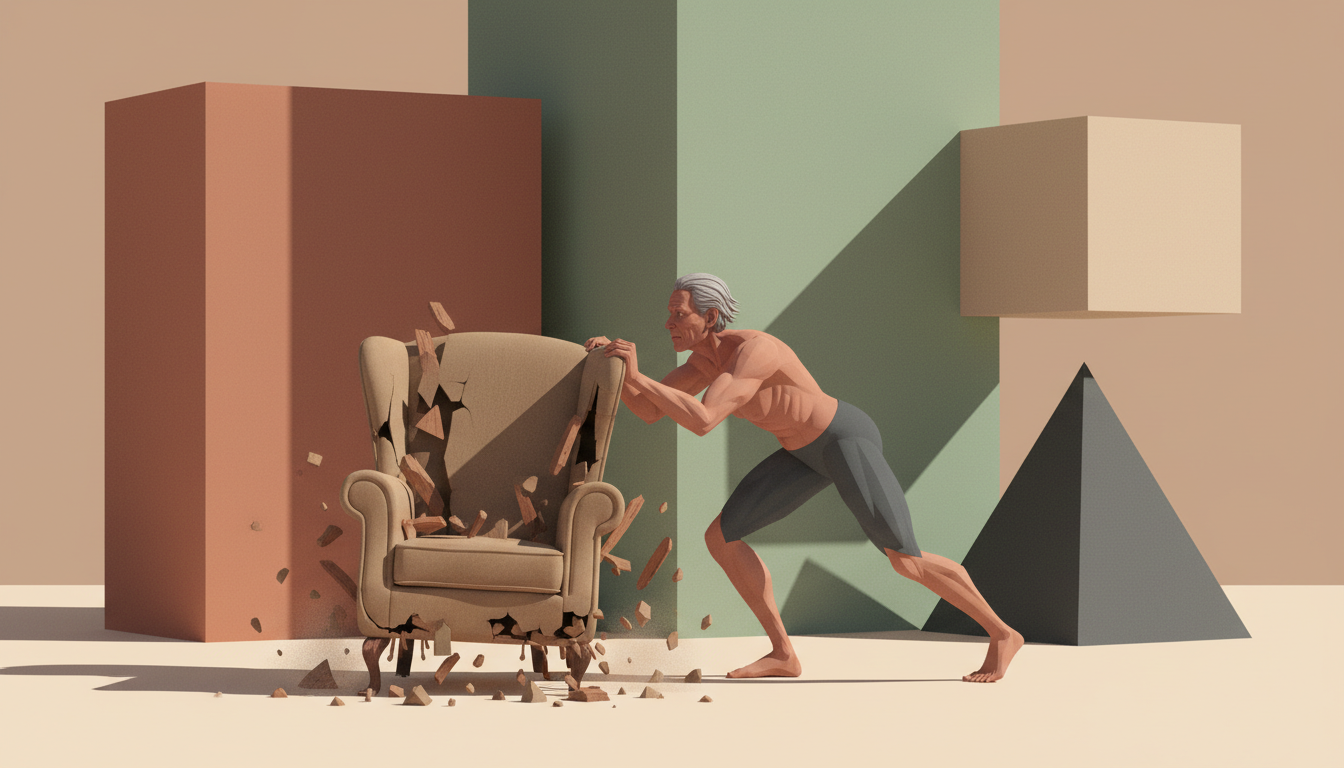
Frailty gets treated like an unavoidable end stage of aging, but the science paints a different picture. Frailty is often a modifiable state driven by muscle loss, low energy availability, inflammation, and reduced movement quality, not simply the number of birthdays you have had.
This post debunks the most common myths, then lays out a phase-based protocol you can implement to protect strength, balance, and resilience.
The Science Behind It
Frailty is a clinical syndrome marked by reduced physiological reserve, meaning you have less buffer when stress hits (illness, surgery, travel, a poor week of sleep). Mechanistically, frailty tends to converge on loss of muscle strength and power, impaired neuromuscular coordination, and energy imbalance that limits repair. That overlaps heavily with sarcopenia, the age-associated decline in muscle strength, mass, and function.
A 2023 review in Circulation (Damluji, Alfaraidhy, Alhajri, et al.) connects sarcopenia with higher risk of falls, mortality, and worse outcomes in chronic diseases like cardiovascular disease. The key point is directionality can run both ways, chronic disease accelerates muscle decline, and low muscle capacity worsens disease tolerance. Translation, muscle is not cosmetic tissue, it is functional reserve.
Frailty is also shaped by movement quality and balance, not only “fitness.” A 2024 experimental study in IJISRT (Surya C.K, Shilpa Chandran.K, D Praveena) reported that Square Stepping Exercise improved fall risk related measures in older adults, highlighting that targeted coordination and stepping patterns can matter as much as general activity.
Finally, energy availability matters. The 2023 IOC consensus statement on Relative Energy Deficiency in Sport (REDs) (Mountjoy, Ackerman, Bailey, et al.) focuses on athletes, but the core mechanism is broadly relevant: when energy intake chronically fails to match expenditure, the body downshifts repair, hormones, bone, and performance. In older adults, “accidental REDs” can happen via low appetite, over-restriction, illness, medication effects, or excessive endurance training without sufficient fueling, all of which can look like frailty over time.
The Protocol
Phase 1: Debunk the Myths (and set your baseline in 20 minutes)
-
Myth 1, Frailty is inevitable: Frailty risk rises with age, but it is not a fixed destiny. Muscle strength, balance, and energy status are trainable at nearly any age, and they strongly influence independence.
-
Myth 2, Frailty equals low body weight: You can be frail at higher body weights, especially with low muscle relative to body mass (sometimes called sarcopenic obesity). The target is function, not the scale.
-
Myth 3, Walking is enough: Walking is excellent, but it underdoses key protective qualities like leg strength, power, and lateral stability. Falls often occur during turns, steps, or slips, not during steady straight-line walking.
-
Myth 4, Frailty is only about muscle mass: Strength and power correlate more tightly with function than mass alone. Neuromuscular coordination, reaction time, and balance training can shift outcomes even before visible muscle gain.
-
Myth 5, Eat less to live longer, always: Chronic under-fueling can trade long-term resilience for short-term weight loss. The REDs consensus highlights how low energy availability disrupts multiple systems, which can mimic or worsen frailty patterns.
-
Baseline check (simple, repeatable):
- Grip strength: Use a dynamometer if available, or track a consistent proxy (farmer carry time with a fixed weight, dead hang time if appropriate).
- Sit-to-stand: Time how long it takes to stand from a chair 5 times without using hands (if safe).
- Balance: Single-leg stand time near a support surface.
- Step control: Can you step laterally and backward confidently, or do you avoid those patterns?
-
Note: If you have recent falls, chest pain, severe dizziness, or major unintentional weight loss, treat this as a medical conversation, not a self-experiment.
Phase 2: Build the Anti-Frailty Base (strength, protein distribution, and energy adequacy)
-
Strength train 2 to 4 days per week (focus on legs, hips, and pulling):
- Key patterns: sit-to-stand or squat variations, hinge patterns (hip hinge, deadlift pattern), step-ups, loaded carries, rows.
- Intensity target: sets that feel challenging in the last few reps while maintaining clean form.
- Progression rule: add a small amount of difficulty weekly (reps, load, or range of motion), not all at once.
-
Prioritize power safely 1 to 2 days per week:
- Frailty is strongly linked to loss of power, the ability to produce force quickly (catching yourself when you trip is a power task).
- Low-risk options: faster sit-to-stands, controlled step-ups with a crisp drive, medicine ball chest passes, or brisk hill walking intervals if joints tolerate.
- Keep volume modest, stop well before fatigue degrades coordination.
-
Protein distribution, not just total:
- Aim to include a meaningful protein serving at each meal, not only at dinner. This supports muscle protein synthesis pulses across the day.
- If appetite is low, shift protein earlier in the day and use higher-protein staples (Greek yogurt, eggs, fish, tofu, lean meats, legumes).
-
Avoid “accidental under-fueling” (REDs principle, applied to aging):
- If you are increasing exercise, ensure food intake rises with it.
- Watch for signs of low energy availability: persistent fatigue, declining performance, poor sleep, low mood, frequent injuries, or unintended weight loss.
- If you are dieting, do it with a plan and an end date, not as a permanent low-calorie default.
-
Cardio as a complement, not the centerpiece:
- Keep aerobic work, but do not let it replace strength. Use cardio to support mitochondrial health and cardiovascular capacity while strength protects function.
Phase 3: Train Balance and Movement Quality (fall resistance, not just fitness)
-
Square Stepping Exercise (SSE) 3 times per week, 10 to 20 minutes:
- The 2024 IJISRT study suggests SSE can improve fall risk related outcomes in older adults.
- Practical setup: tape a grid on the floor, then practice stepping patterns (forward, lateral, diagonal, backward) with increasing complexity.
- Progression: increase pattern complexity first, then speed. Complexity builds brain-body coordination under low threat.
-
Add “real-world” balance skills 4 to 6 days per week, 2 to 5 minutes:
- Single-leg stance near a counter.
- Head turns while walking (slow, controlled).
- Lateral stepping drills, because many falls occur during side steps or turns.
-
Treat vision and foot mechanics as performance variables:
- Update vision correction if needed, and take foot pain seriously. Poor sensory input increases fall risk, even in strong people.
-
Use simple tech to spot decline early:
- Movement quality often deteriorates before a fall happens.
- Emerging tools like OpenCap (Uhlrich, Falisse, Kidziński, et al., 2023, PLOS Computational Biology) show the direction the field is moving, smartphone-based movement analysis that can quantify kinematics and dynamics. You do not need a lab to start paying attention to how you move, and clinicians may soon have more accessible options for objective tracking.
Phase 4: Recovery, illness-proofing, and when to escalate
-
Sleep as muscle medicine:
- Poor sleep increases inflammation, reduces training adaptation, and worsens reaction time. Protect a consistent sleep window, even if total sleep varies.
-
During illness or high stress, protect the minimum effective dose:
- Frailty often accelerates during periods of inactivity.
- Keep a “floor plan”: brief walks, a few sit-to-stands, light mobility, and protein-forward meals until full training returns.
-
Be cautious with pharmacologic shortcuts:
- The 2026 paper in Experimental and Therapeutic Medicine discusses formoterol (a β2-adrenergic agonist) improving grip force and activity in cancer cachexia contexts. Cachexia is a severe catabolic state, and this is not a general anti-frailty hack.
- Practical takeaway: drugs that alter adrenergic signaling can change muscle performance in specific disease states, but for most people, training, nutrition, and medical evaluation for underlying disease are the correct first-line path.
-
Escalate evaluation if the trajectory is negative:
- Unintentional weight loss, persistent weakness, new shortness of breath, repeated falls, or rapid functional decline should trigger a clinician visit. Frailty can be a sign of underdiagnosed disease, not only aging.
Key Takeaways
- Frailty is not inevitable, it is often a modifiable state driven by muscle capacity, balance, and energy availability.
- Debunk the “walking is enough” myth: walking helps, but strength, power, and stepping coordination are the core protective levers for independence and fall resistance.
- Fuel and train for reserve: under-fueling (a REDs-like pattern) and chronic disease can accelerate sarcopenia, while consistent strength training plus protein distribution builds resilience you can cash in during stress.