Exercise as Molecular Medicine: How Movement Rewrites Disease Risk and Extends Healthspan
Most people think exercise works because it “burns calories” or “strengthens the heart.” Those are surface-level outcomes. The deeper story is that exercise is a systems-wide molecular signal that changes gene expression, protein turnover, immune behavior, and metabolic control, often in the exact directions that aging and chronic disease push them the other way.
If you care about healthspan, the relevant question is not “Is exercise good?” It is which molecular pathways does exercise touch, and how do those changes translate into lower risk of diabetes, cancer complications, frailty, and neurodegeneration.
What You Need to Know First
Healthspan is the years you live with high physical and cognitive function, low disease burden, and independence. Lifespan is just total years alive. Exercise is one of the few interventions that reliably improves both, but it does so through multiple overlapping mechanisms, not one magic pathway.
At the molecular level, exercise is best understood as a repeated, recoverable stressor. A single bout creates transient strain (oxidative stress, calcium flux, energy depletion, microdamage). Recovery triggers adaptation: cells upgrade mitochondria, improve insulin signaling, remodel tissue, and tune inflammation. Over time, those adaptations raise your baseline resilience.
Finally, exercise is not one thing. Aerobic training, resistance training, balance and coordination work, and higher-intensity intervals each emphasize different molecular signals. A complete healthspan plan uses this to your advantage, especially as you age.
The Science
How It Works
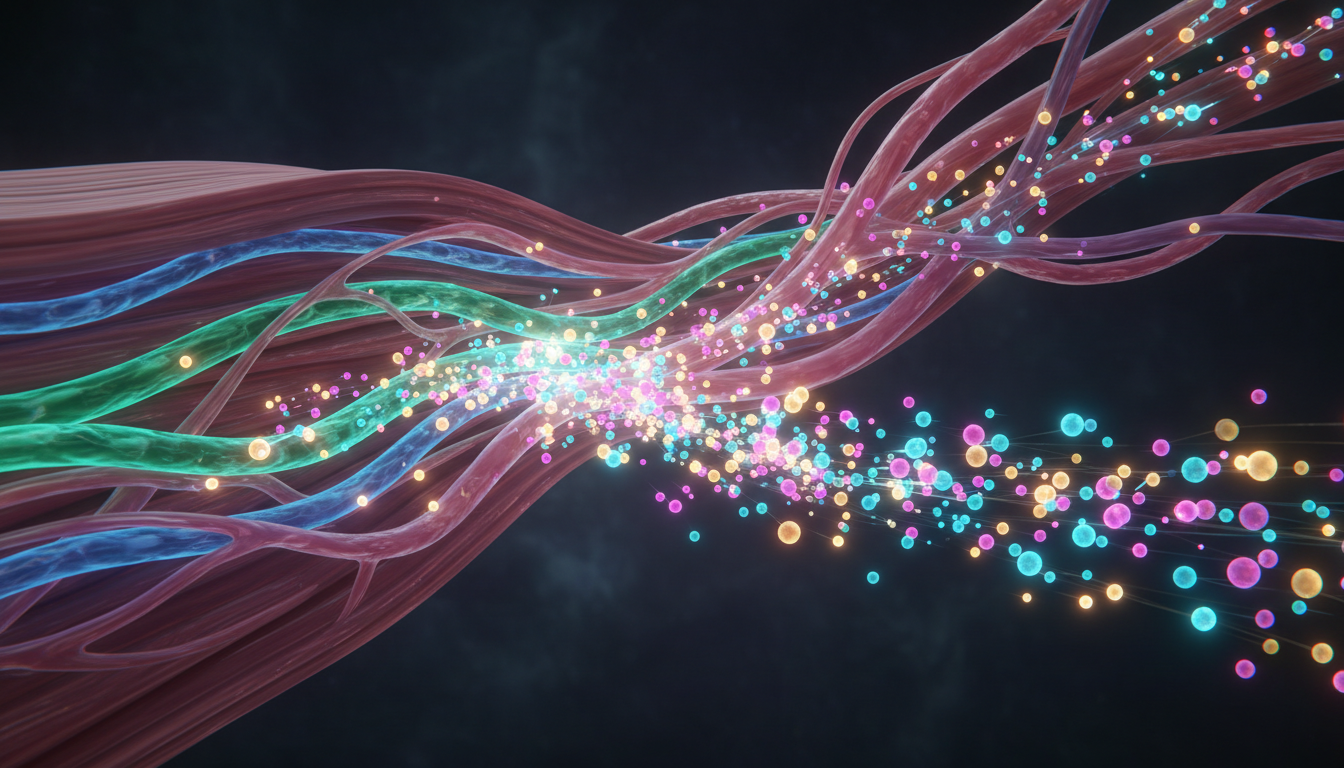
Exercise initiates a cascade of signals that start in muscle but propagate to nearly every organ via myokines (muscle-derived signaling proteins), metabolites, and nervous system activation. In contracting muscle, rising AMP to ATP ratio activates AMPK, a master energy sensor. AMPK increases glucose uptake, stimulates fat oxidation, and promotes mitochondrial biogenesis partly through PGC-1α, a transcriptional coactivator often described as a central switch for endurance adaptations.
At the same time, mechanical tension from resistance exercise activates mTORC1 signaling, which drives muscle protein synthesis and remodeling. This is not “good” or “bad” in isolation. It is context-dependent. Chronic overnutrition can keep mTOR unnecessarily high, while resistance training pulses mTOR in a way that supports tissue maintenance, bone loading, and metabolic health. Healthspan is often about restoring rhythm to these pathways, not suppressing them.
Exercise also improves proteostasis (protein quality control). Repeated training upregulates autophagy and lysosomal pathways that clear damaged proteins and organelles. This matters because aging is associated with accumulation of dysfunctional proteins and mitochondria, contributing to insulin resistance, inflammation, and impaired muscle function.
Another major lever is immune and inflammatory tuning. Acute exercise transiently increases inflammatory signals, but regular training tends to lower chronic low-grade inflammation by shifting cytokine profiles and improving adipose tissue function. This is one reason exercise is consistently associated with lower cardiometabolic risk.
Finally, exercise influences the nervous system and vasculature. Shear stress from increased blood flow improves endothelial function, supporting nitric oxide signaling, vascular compliance, and tissue perfusion. In the brain, exercise increases neurotrophic signaling and may support synaptic plasticity through pathways linked to growth factors and improved metabolic substrate delivery.
What the Research Shows
In older adults, a central healthspan threat is sarcopenia, the loss of muscle mass and function that increases frailty, falls, insulin resistance, and loss of independence. A 2023 systematic review and network meta-analysis by Shen, Shi, Nong, and colleagues in the Journal of Cachexia, Sarcopenia and Muscle compared exercise types for sarcopenia and reinforced a practical point: exercise works, but modalities differ in what they improve. Resistance training tends to be a primary driver of strength and functional gains, while multicomponent programs can better cover endurance, balance, and mobility outcomes, which are often the difference between independence and disability.
Falls are not just accidents, they are often the visible endpoint of declining neuromuscular control, reaction time, and lower-limb strength. A 2024 study by Surya C.K, Shilpa Chandran.K, and D Praveena in the International Journal of Innovative Science and Research Technology evaluated Square Stepping Exercise (SSE) in senior citizens and reported benefits for fall risk mitigation. Mechanistically, this kind of training likely works by challenging proprioception, motor planning, and rapid weight shifting, adaptations that are not fully trained by walking alone.
Exercise also intersects with disease states where muscle loss is not merely aging-related but disease-driven. Cancer cachexia is a severe wasting syndrome that contributes meaningfully to mortality and disability. A 2026 paper in Experimental and Therapeutic Medicine discussed cachexia and evaluated physiological parameters like grip force and physical activity in the context of a β2-adrenergic agonist (formoterol). While this study is not an exercise intervention, it highlights an important molecular theme: adrenergic signaling, muscle protein balance, and fatigue are central to function. Exercise engages many of the same downstream domains, including neuromuscular activation and anabolic-catabolic balance, which is one reason maintaining movement capacity in cancer and chronic disease is a major healthspan goal.
The link between muscle and metabolic disease is also bidirectional. A 2023 review by Chen, Huang, Dong, and colleagues in Diabetes, Metabolic Syndrome and Obesity described shared mechanisms connecting sarcopenia and type 2 diabetes, including insulin resistance, chronic inflammation, oxidative stress, and advanced glycation end products. Exercise addresses each of these at least partially through improved insulin signaling, mitochondrial function, and inflammatory tone. In practical terms, this positions skeletal muscle as both a target and a tool: improving muscle quantity and quality can improve metabolic control, and better metabolic control helps preserve muscle.
Measurement matters, too. If healthspan is the goal, you need ways to track function, not just weight or BMI. A 2023 systematic review by Lam, Tang, and Fong in the Journal of NeuroEngineering and Rehabilitation evaluated markerless motion capture (MMC) applications in rehabilitation. The field is still early, but the direction is clear: objective movement analytics will increasingly help quantify gait, balance, and kinematics, making it easier to detect decline earlier and personalize training.
Taken together, the evidence base supports a broad conclusion: exercise improves healthspan outcomes through multiple pathways, and the most consistent benefits come from regular, progressive training that includes strength, aerobic capacity, and neuromotor work. The remaining uncertainty is often about the best “mix” for a given person, and how to maintain adherence and recovery as life constraints and aging physiology change.
Practical Applications
Who Benefits Most
Everyone benefits, but the healthspan return on investment is especially high for:
- Adults over 40, when muscle power, VO2 max, and connective tissue resilience begin to decline faster without targeted training.
- People with prediabetes or type 2 diabetes risk, since skeletal muscle is a major site of glucose disposal and insulin sensitivity adaptation.
- Those with early signs of frailty, low grip strength, slow gait, or recurrent near-falls, because functional decline is often reversible at this stage.
- Individuals with sarcopenia or low lean mass, particularly if paired with metabolic dysfunction, since muscle is a metabolic organ, not just a locomotor one.
Implementation Considerations
Think in terms of building a weekly “molecular stimulus portfolio.” Each training type is a different signal.
1) Resistance training (mechanical tension, mTOR pulsing, neuromuscular recruitment)
- Aim for progressive overload over time, increase load, reps, sets, or difficulty gradually.
- Prioritize compound patterns that scale with age: squat or sit-to-stand variants, hip hinge variants, pushing, pulling, loaded carries.
- Include some work that challenges power (fast intent with safe loads), because power declines earlier than strength and predicts function.
2) Aerobic training (AMPK, mitochondrial biogenesis, vascular function)
- Mix steady, moderate sessions with occasional higher-intensity efforts if appropriate.
- Use simple anchors: conversational pace for base work, harder efforts for capacity.
- If time-limited, remember that consistency beats perfection, frequent shorter sessions can still drive mitochondrial and vascular adaptation.
3) Balance and coordination training (sensorimotor integration, fall risk reduction)
- Include targeted balance work 2 to 4 times per week, brief sessions can be effective.
- Consider structured patterns like Square Stepping Exercise, as studied in older adults (Surya C.K et al., 2024), especially if fall risk is a concern.
- Progress by narrowing base of support, adding head turns, changing surfaces, or introducing cognitive dual-task elements.
4) Recovery and adaptation (where the benefits actually consolidate)
- Sleep and protein intake influence muscle remodeling and mitochondrial adaptation.
- Manage total stress load, excessive training plus poor recovery can increase injury risk and reduce adherence.
- Deload weeks or lighter phases can be strategic, especially for older trainees or those returning after illness.
5) Tracking and feedback
- Track function, not just workouts: grip strength, sit-to-stand time, gait speed, step count trends.
- Emerging tools like markerless motion capture may soon make gait and balance tracking easier in clinical and home settings (Lam et al., 2023), but simple tests still work now.
Common Mistakes to Avoid
- Only doing walking and calling it complete. Walking is valuable, but it often under-trains strength, power, and balance.
- Avoiding intensity forever. You do not need extreme training, but some progressive challenge is required for adaptation.
- Neglecting protein and recovery, then blaming age for lack of progress. Adaptation is stimulus plus resources.
- Chasing soreness as a metric of effectiveness. Molecular adaptation does not require constant muscle damage.
- Training around pain without a plan. Persistent joint or tendon pain usually needs load modification, technique changes, and sometimes clinical assessment.
The Bigger Picture
Exercise is one of the rare interventions that acts upstream of multiple diseases because it targets shared mechanisms: mitochondrial dysfunction, insulin resistance, chronic inflammation, vascular aging, and loss of muscle quality. It is not competing with nutrition, sleep, or medical care, it amplifies them by improving the body’s capacity to respond.
For Lifelyx-style healthspan optimization, the goal is to treat exercise as a programmable signal. You are not just “being active.” You are dosing specific molecular inputs to preserve strength, metabolic flexibility, and movement competence, which collectively determine how long you stay independent.
Key Takeaways
- Exercise improves healthspan by changing molecular signaling, including AMPK, PGC-1α, mTOR, autophagy, and inflammatory pathways.
- Muscle is a metabolic organ, improving muscle mass and function can reduce diabetes risk mechanisms described in the sarcopenia-diabetes literature (Chen et al., 2023).
- Resistance training preserves strength and function, while aerobic work upgrades mitochondria and vascular health, both are complementary for aging biology.
- Balance and coordination training reduce fall risk, structured approaches like Square Stepping Exercise show promise in older adults (Surya C.K et al., 2024).
- Measure what matters, functional metrics and emerging motion-tracking tools (Lam et al., 2023) can help detect decline early and personalize training.