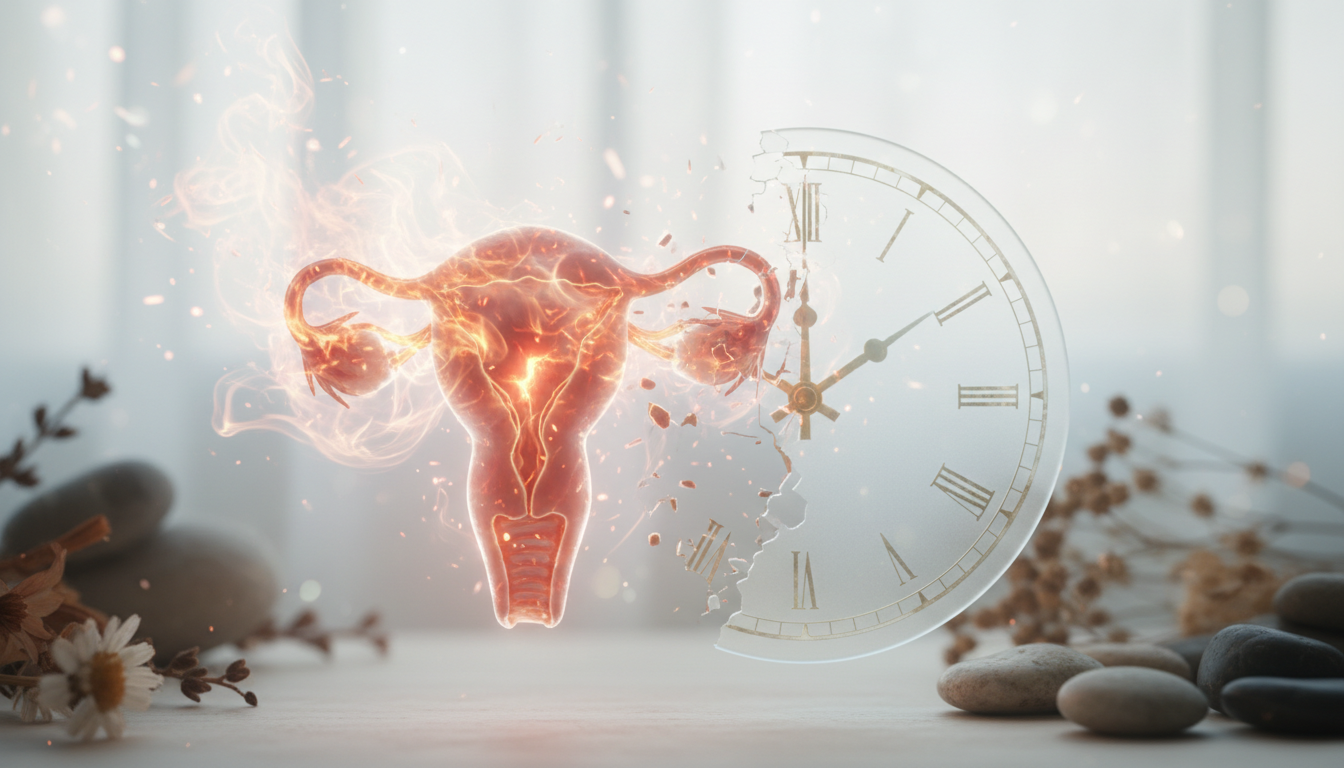
Endometriosis Is Not “Just Pain”, It Can Accelerate Reproductive Aging
Endometriosis and adenomyosis are inflammatory, estrogen-sensitive diseases that can quietly erode fertility years before someone feels “ready” to conceive. The win is not tougher symptom tolerance, it is earlier diagnosis plus a fertility timeline that matches biology.
Why it matters:
- These conditions often delay diagnosis, which means lost time while inflammation and scarring compound. That time cost is highest in the 30s, when ovarian reserve naturally declines.
- Pain is only one output. The deeper issue is a disease environment that can disrupt ovulation, implantation, and egg quality.
- Longevity thinking applies here: measure earlier, reduce inflammatory burden, and preserve options before decline becomes irreversible.
The evidence:
- Aging is measurable, and risk prediction is improving. A 2024 Nature Medicine study by Argentieri, Xiao, Bennett, et al. built a proteomic aging clock from 2,897 plasma proteins in the UK Biobank and showed it predicts multimorbidity and mortality risk across populations. Translation: systemic inflammatory and tissue remodeling signals can be quantified, and reproductive inflammatory diseases likely leave detectable fingerprints even when symptoms are normalized.
- Oxidative stress is a core aging amplifier. A 2023 review in Antioxidants (Maldonado, Morales, Urbina, et al.) ties oxidative stress to multiple aging hallmarks, including mitochondrial dysfunction and genomic instability. Translation: chronic pelvic inflammation is not just local, it can plausibly worsen the cellular conditions that matter for oocyte competence and endometrial receptivity.
- Biological age is tissue-specific, and clocks are getting universal. A 2023 Nature Aging paper by Lu, Fei, Haghani, et al. describes pan-mammalian DNA methylation clocks that accurately estimate tissue age across species. Translation: “reproductive aging” is not only chronological, and future tools may quantify whether uterine or ovarian tissue is aging faster than expected.
- Emerging treatments are moving upstream. CRISPR progress is rapidly expanding what is “actionable” in disease susceptibility and biology (Wang and Doudna, Science, 2023). Translation: gene and cell-targeted approaches for endometriosis are still early, but the trajectory is toward mechanism-based interventions, not symptom suppression alone.
What to do:
- Treat persistent pelvic pain, heavy bleeding, painful sex, or infertility as a diagnostic problem, not a coping problem. Ask directly about endometriosis versus adenomyosis, and whether imaging, referral, or laparoscopy is appropriate.
- If pregnancy is a goal, align timelines with biology: discuss ovarian reserve testing and fertility preservation options early, especially if symptoms have lasted years.
The counterpoint: Some people conceive easily despite endometriosis or adenomyosis, so the goal is not panic, it is earlier clarity and optionality.