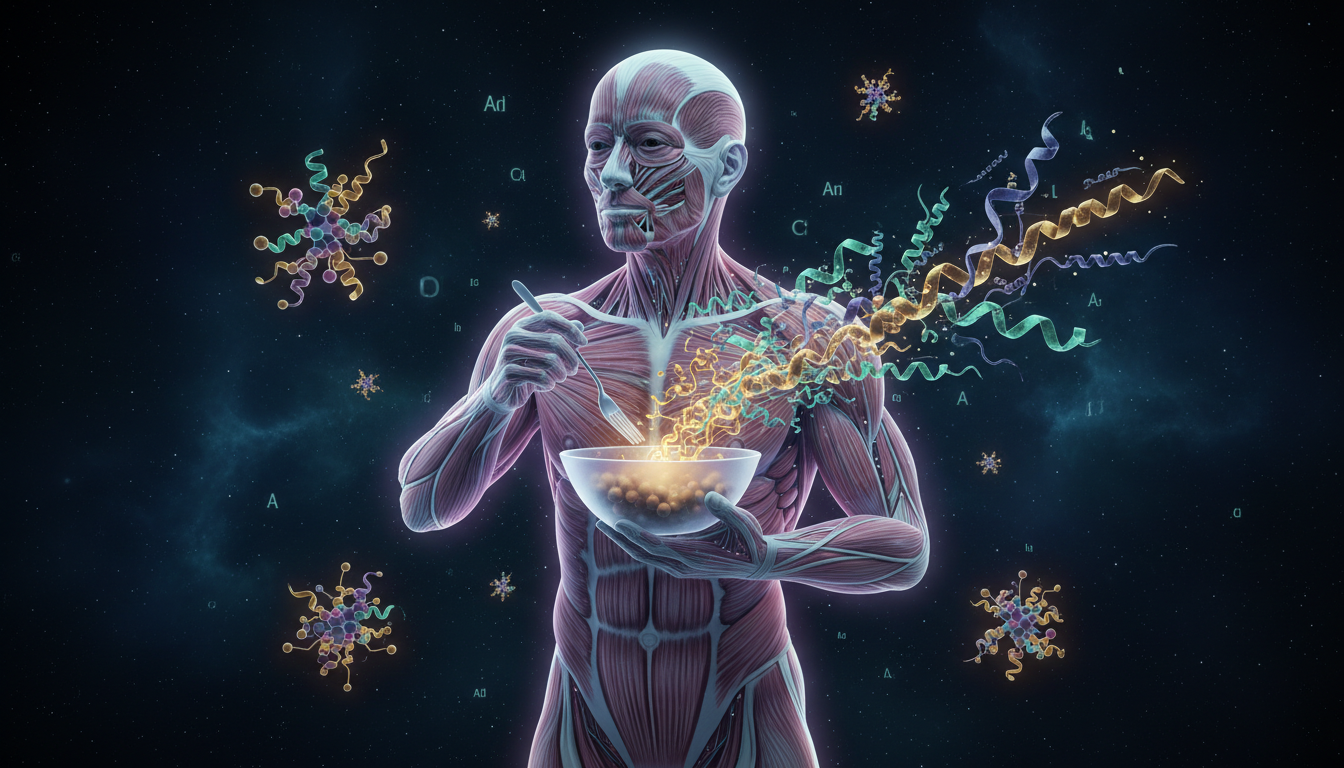
Diet for Healthy Aging Is Shifting Toward a Muscle-First Protocol
Across 2024 to 2025 healthy aging research, the signal is getting clearer, diet quality matters, but preserving muscle is emerging as the bottleneck that determines whether “healthy eating” translates into real-world independence. A 2024 Delphi consensus from the Global Leadership Initiative in Sarcopenia (GLIS) formalized sarcopenia as a muscle disease defined by low strength and function, not just low muscle size, which reframes diet as a tool to protect performance, not only weight. Meanwhile, ICU data show how fast muscle can disappear under stress, with some patients losing more than 15 percent of muscle mass in a week, a reminder that aging resilience depends on protein, energy availability, and recovery capacity long before a crisis hits.
What Researchers Found
A 2024 consensus process led by Ben Kirk and colleagues in Age and Ageing (GLIS) pushed the field toward a more unified conceptual definition of sarcopenia. The important shift is practical, sarcopenia is not framed as “small muscles” alone, but as a clinically meaningful loss of strength and function, with muscle quantity as supportive context rather than the headline outcome. For diet and healthy aging, this matters because nutrition strategies that improve body weight or labs but fail to maintain strength can look “successful” on paper while still allowing functional decline.
The epidemiology supports why this is urgent. A 2023 review by Shuai Yuan and Susanna Larsson in Metabolism summarized that sarcopenia prevalence commonly lands around 10 percent to 16 percent, depending on the definition used, and it clusters with risk factors that are strongly diet-sensitive across the lifespan (low protein intake, low physical activity, chronic disease burden, and inflammation). Different definitions change the exact prevalence, but not the core message, muscle loss is common and consequential.
On the extreme end, critical illness shows the upper bound of how quickly humans can lose lean tissue. A systematic review and meta-analysis by Brigitta Fazzini and colleagues in Critical Care (2023) reported that ICU patients can lose more than 15 percent of muscle mass in one week, and the paper synthesizes how muscle wasting is assessed across studies. This is not “aging” in the usual sense, but it is the same biology under a magnifying glass, inflammatory stress, inactivity, and inadequate intake accelerate muscle breakdown and blunt rebuilding.
Finally, healthy aging does not happen in a vacuum, it happens inside a global food environment. A 2023 analysis in EClinicalMedicine using Global Burden of Disease 2019 data (Chong, Jayabaskaran, Kong, et al.) modeled trends in malnutrition and obesity across 204 countries and projected burden through 2030, reinforcing that modern populations are increasingly exposed to both undernutrition and overnutrition. For aging adults, that combination often looks like excess energy with inadequate protein, fiber, and micronutrients, a recipe for sarcopenic obesity and metabolic disease.
Why This Matters for Healthspan
If sarcopenia is defined by strength and function, the target of “healthy eating” changes. The metric that predicts whether you can climb stairs, get up from the floor, recover from hospitalization, or tolerate cancer therapy is not your scale weight, it is your reserve capacity. Diet becomes less about chasing a single biomarker and more about maintaining the tissues that do work, skeletal muscle, connective tissue, and the cardiometabolic systems that supply them.
This also connects directly to cardiovascular outcomes. A 2023 review in Circulation (Damluji, Alfaraidhy, Alhajri, et al.) describes sarcopenia as both a consequence and amplifier of chronic disease, including cardiovascular disease, with associations to higher risk of mortality, falls, and reduced quality of life. In other words, muscle loss is not cosmetic, it is a system-level vulnerability that can accelerate decline across multiple organs.
The Mechanism
Muscle is a metabolically active organ that responds to three major inputs, mechanical tension (strength training and daily movement), amino acids (protein quality and distribution), and energy availability (enough calories to support rebuilding). Aging shifts the dose-response curve, older muscle becomes less sensitive to anabolic signals, a phenomenon often called anabolic resistance. That means the same diet that maintained muscle at 35 may slowly fail at 65 unless protein distribution, total intake, and training stimulus are updated.
Stress biology explains the “rapid loss” seen in the ICU literature. Inflammatory cytokines, immobilization, and catabolic hormones increase muscle protein breakdown while suppressing synthesis. If dietary protein and total energy are low, the body uses muscle as a readily available amino acid reservoir to sustain immune function and gluconeogenesis. The lesson for healthy aging is not that everyone needs an ICU protocol, but that resilience is built upstream, by keeping muscle protein turnover biased toward maintenance and repair.
Context and Limitations
These papers do not prove a single best “longevity diet,” and several are reviews or consensus statements rather than randomized trials. The GLIS consensus clarifies definitions, but it does not prescribe dietary thresholds. The ICU muscle wasting data reflect extreme conditions, and translation to community-dwelling adults should be cautious. Still, taken together with sarcopenia epidemiology and cardiovascular links, the direction is consistent, healthy aging diets are increasingly judged by whether they preserve function, not only whether they lower weight or LDL.
Practical Implications
A practical 2024 to 2025 protocol focus is to treat diet as muscle insurance while maintaining cardiometabolic health. Consider stress-testing your current eating pattern against these muscle-first checkpoints:
- Protein distribution across the day: Aim for protein at each meal, not a single large dose at dinner, to create multiple opportunities for muscle protein synthesis.
- Energy adequacy during training phases: Chronic low energy intake can quietly trade muscle for leanness, especially when paired with high activity or appetite suppression.
- Fiber and micronutrient density: Build meals around minimally processed protein plus high-fiber plants to support metabolic health without crowding out protein.
- Function as a primary outcome: Track strength and performance alongside weight, examples include grip strength, sit-to-stand time, walking pace, or training log progression.
- Plan for “catabolic events”: Illness, surgery, travel, and bed rest are predictable muscle-loss accelerators. Having a default plan to protect intake and resume movement quickly can reduce the depth of the dip.
The emerging takeaway is simple but not simplistic, for healthy aging, diet works best when it is designed to keep you strong enough to use your health.