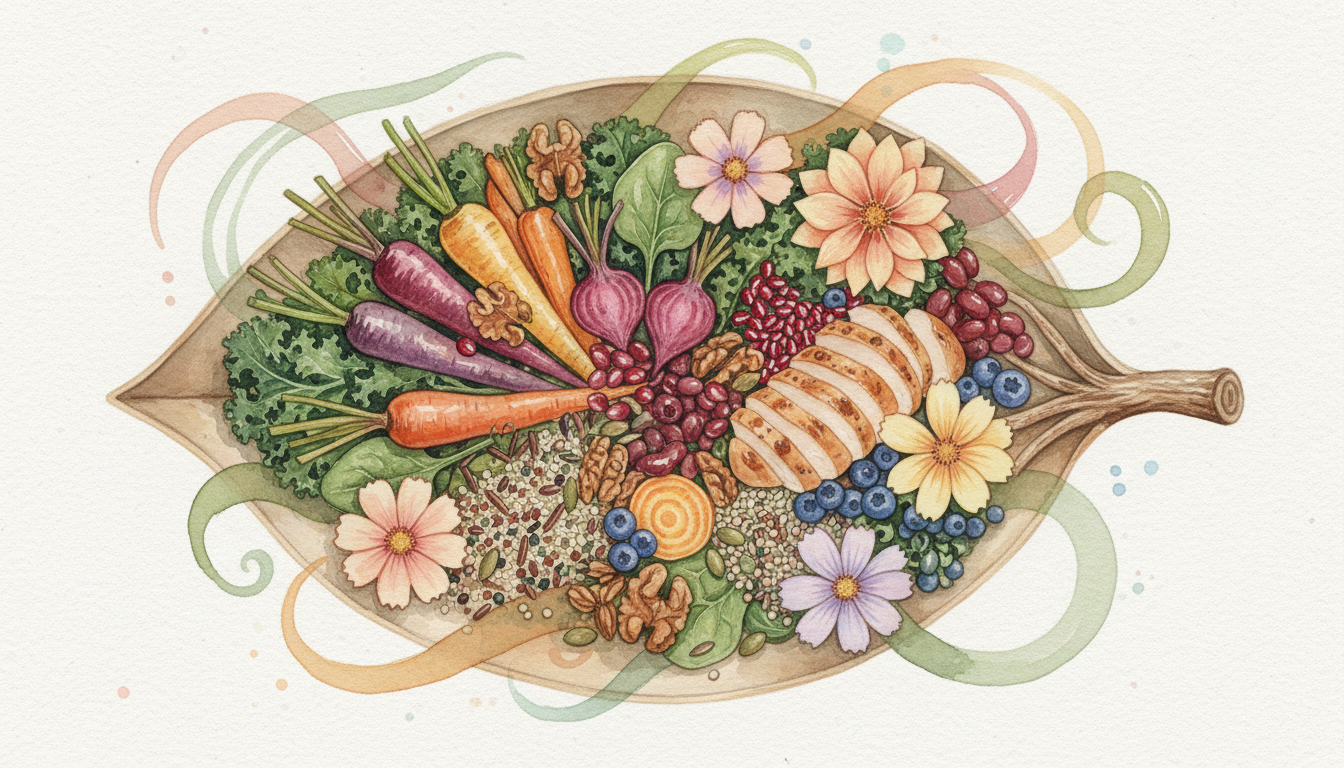
Build a Longevity-Supportive Autumn Plate With October Foods
October eating should do more than feel seasonal. A well-built autumn plate can support the biological priorities that matter most for healthspan, especially muscle preservation, cardiometabolic stability, gut health, and micronutrient adequacy.
The practical goal is simple: use seasonal foods as the foundation, then structure each meal so it protects against the nutrition gaps that become more consequential with age.
The Science Behind It
Longevity nutrition is not just about antioxidants or “superfoods.” It is about maintaining the body systems most strongly linked to independence: muscle, metabolism, cardiovascular function, immune resilience, and the gut microbiome.
A 2023 review in Metabolism by Yuan and Larsson estimated that sarcopenia affects roughly 10% to 16% of older adults, depending on the definition used. Sarcopenia is the progressive loss of muscle mass and function, and it is associated with falls, disability, reduced quality of life, and higher mortality risk. A 2024 Delphi consensus from the Global Leadership Initiative in Sarcopenia emphasized that sarcopenia is not just “less muscle,” but a clinically important decline in strength and physical function.
This matters for autumn eating because cooler-weather meals often become starch-heavy and protein-light. That pattern can be comforting, but it may not be optimal for aging biology. The Lancet review on malnutrition in older adults highlights that reduced access to nutrient-dense foods, comorbidities, and physiological changes can increase malnutrition risk with age. Meanwhile, a 2023 Circulation review linked sarcopenia with cardiovascular disease progression and worse outcomes, reinforcing that muscle is not only a movement organ, it is also a metabolic and cardiovascular asset.
October produce can help, but only if the plate is built correctly. Mushrooms, apples, pears, winter squash, Brussels sprouts, kale, cauliflower, pomegranates, pumpkin seeds, walnuts, legumes, and whole grains can provide fiber, polyphenols, minerals, unsaturated fats, and plant compounds. The key is pairing them with sufficient protein and energy so the meal supports both cellular health and functional capacity.
The Protocol
Phase 1: Set the Foundation Before You Shop
-
Choose 3 seasonal vegetables for the week: Pick at least one cruciferous vegetable such as Brussels sprouts, kale, cabbage, or cauliflower, one orange vegetable such as pumpkin, butternut squash, or sweet potato, and one mushroom such as shiitake, maitake, cremini, or oyster.
- Why it works: This combination gives you different classes of plant compounds, including glucosinolates from crucifers, carotenoids from orange vegetables, and unique mushroom compounds such as ergothioneine.
-
Add 2 seasonal fruits with edible fiber: Apples, pears, and pomegranates are strong October choices.
- Best practice: Eat apples and pears with the skin when tolerated, because much of their fiber and polyphenol content is concentrated there.
- Use case: Add sliced apple to a savory salad, pear to oats or yogurt, and pomegranate seeds to grain bowls.
-
Select 2 protein anchors before selecting starches: Choose foods such as lentils, beans, Greek yogurt, eggs, fish, poultry, tofu, tempeh, or lean meat.
- Why it matters: Seasonal eating becomes more longevity-supportive when protein is intentional. Sarcopenia and frailty research consistently points toward muscle function as a core target for healthy aging.
-
Pick one mineral-rich topper: Pumpkin seeds, walnuts, or aged cheese can improve both nutrient density and meal satisfaction.
- Pumpkin seeds provide magnesium and zinc.
- Walnuts provide plant-based omega-3 fats and polyphenols.
- A small amount of aged cheese can add flavor and protein, but keep portions moderate if sodium or saturated fat intake is a concern.
-
Caveat: If you have kidney disease, diabetes, swallowing difficulty, gastrointestinal disease, or medically prescribed dietary restrictions, personalize this framework with a clinician or registered dietitian.
Phase 2: Build the Autumn Plate
Use this structure for lunch or dinner, especially on days when you want a meal that supports both metabolic health and muscle maintenance.
-
Start with a protein base: Make protein the first decision, not the afterthought.
- Examples:
- Lentils plus Greek yogurt sauce
- Salmon with roasted Brussels sprouts
- Eggs with sautéed mushrooms and greens
- Tofu or tempeh with squash and cabbage
- Chicken with cauliflower and farro
- Practical target: For many adults, a protein-containing main meal will land around 25 to 35 grams of protein, but needs vary by body size, activity level, age, and medical status.
- Examples:
-
Fill half the plate with plants: Use a combination of cooked and raw seasonal produce.
- Example combination:
- Roasted butternut squash
- Sautéed mushrooms
- Shaved kale or cabbage
- Pomegranate seeds or sliced apple
- Why it works: Fiber supports the gut microbiome, while colorful plant foods provide polyphenols and carotenoids that interact with oxidative stress and inflammatory pathways.
- Example combination:
-
Add a slow carbohydrate if activity or appetite supports it: Choose lentils, beans, oats, barley, farro, quinoa, sweet potato, or winter squash.
- For active individuals: Include a full serving, especially after resistance training or long walks.
- For lower activity days: Emphasize non-starchy vegetables and legumes, and adjust grain portions based on energy needs and glucose response.
-
Include a fat source to improve satiety and absorption: Use extra-virgin olive oil, walnuts, pumpkin seeds, avocado, or tahini.
- Mechanism: Dietary fat helps absorb fat-soluble carotenoids from orange and leafy vegetables, including beta-carotene.
-
Use acid and herbs instead of relying only on salt: Apple cider vinegar, lemon, mustard, parsley, rosemary, thyme, garlic, and black pepper can improve flavor without making the meal sodium-heavy.
- This is especially useful for people monitoring blood pressure or cardiovascular risk.
Phase 3: Cook for Nutrient Density, Not Just Comfort
Autumn cooking often means roasting, stewing, and baking. Those methods can be excellent, but small technique changes improve the health impact of the meal.
-
Roast, but avoid charring: Roast squash, Brussels sprouts, cauliflower, and mushrooms until browned and tender, not blackened.
- Protocol: Use moderate heat, olive oil, and enough spacing on the pan so vegetables caramelize rather than steam.
-
Chop cruciferous vegetables before cooking: Chop Brussels sprouts, kale, cabbage, or cauliflower and let them sit briefly before heating.
- Why it may help: Chopping supports the enzymatic conversion of glucosinolates into biologically active compounds. Cooking methods and timing influence how much is retained.
-
Pair mushrooms with protein: Mushrooms add umami and texture, but they are not usually a complete protein anchor by themselves.
- Good pairings:
- Shiitake with eggs
- Maitake with lentils
- Cremini with chicken or tofu
- Oyster mushrooms with beans and greens
- Good pairings:
-
Use soups strategically: Soups can be excellent for increasing vegetable intake, but they can become low-protein unless planned carefully.
- Upgrade formula:
- Bone broth or legume base
- Beans, lentils, chicken, tofu, or fish
- Kale, cabbage, carrots, squash, mushrooms
- Olive oil added at the end
- Caveat: Watch sodium if using packaged broth.
- Upgrade formula:
Phase 4: Protect Against the Common Autumn Nutrition Traps
This phase is about avoiding the patterns that quietly undermine healthspan.
-
Do not let “seasonal” mean mostly starch: Pumpkin bread, apple pastries, mashed potatoes, and sweetened drinks may be seasonal, but they should not define the pattern.
- Better swap: Roasted squash with lentils and walnuts instead of sweetened squash casserole.
-
Do not under-eat if appetite declines: The Lancet review on malnutrition in older adults emphasizes that malnutrition is common and clinically important. A smaller appetite should trigger more nutrient-dense meals, not lower-quality meals.
- Add-ons that help:
- Olive oil
- Greek yogurt
- Eggs
- Nut butters
- Pumpkin seeds
- Beans or lentils
- Soft-cooked vegetables
- Add-ons that help:
-
Do not rely on supplements to fix a low-quality plate: Foods provide matrices of fiber, minerals, phytochemicals, and protein that isolated compounds do not fully replicate.
- Supplements may have a role for specific deficiencies, but the base layer is still food quality, meal structure, and consistency.
-
Track function, not just weight: Frailty research, including the 2024 New England Journal of Medicine review by Kim and Rockwood, emphasizes functional capacity. Your plate should support the ability to move, recover, and remain independent.
- Track weekly:
- Grip strength if you have access to a dynamometer
- Walking pace
- Ability to rise from a chair without using hands
- Training recovery
- Appetite and energy
- Track weekly:
Sample October Longevity Plate
Try this as a template, then rotate ingredients based on what is local.
- Protein: Lentils, salmon, tofu, eggs, or chicken
- Vegetables: Roasted Brussels sprouts, sautéed mushrooms, kale, and butternut squash
- Carbohydrate: Farro, barley, quinoa, beans, or sweet potato
- Fat: Olive oil, walnuts, pumpkin seeds, or tahini
- Polyphenol finish: Pomegranate seeds, sliced apple, pear, herbs, or vinegar-based dressing
One practical bowl: lentils with roasted squash, Brussels sprouts, shiitake mushrooms, kale, pomegranate seeds, walnuts, olive oil, mustard, and apple cider vinegar. It is seasonal, fiber-rich, protein-aware, and built around the biology of aging rather than food trends.
Key Takeaways
- Build the autumn plate around protein first, because muscle preservation is central to healthspan and sarcopenia is common with aging.
- Use October produce for diversity, especially mushrooms, cruciferous vegetables, winter squash, apples, pears, pomegranates, walnuts, and pumpkin seeds.
- Prioritize function over food aesthetics: the best longevity meal supports strength, energy, cardiometabolic health, and consistent nourishment.