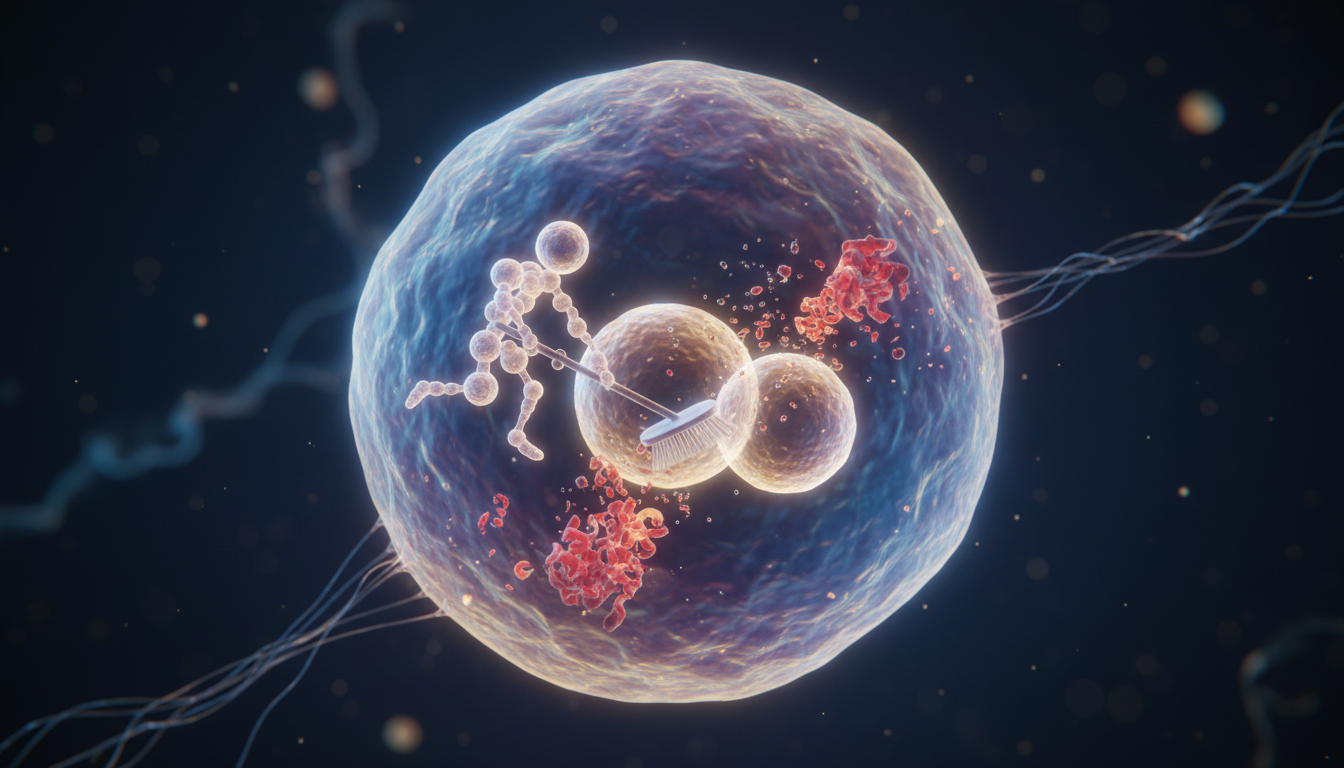
Autophagy Is Not a Fasting Hack, It Is Cellular Housekeeping
The Problem
You may have heard that autophagy “turns on” after a certain number of fasting hours, as if your cells are waiting for a countdown timer to start cleaning house. That idea is appealing because it makes longevity feel controllable. Skip breakfast, hit the magic threshold, activate cellular renewal.
But biology is rarely that binary. Autophagy is not an on-off switch. It is a constant cellular maintenance system that helps degrade and recycle damaged proteins, worn-out mitochondria, and other cellular debris. Fasting can influence it, but so can exercise, nutrient status, sleep, metabolic health, and age.
The challenge is that many people chase autophagy in a way that can backfire. They fast longer, eat less protein, train harder, and assume more stress equals more longevity. In reality, healthy aging depends on the balance between cellular cleanup and cellular rebuilding. You need both.
Why It’s Harder Than You Think
The popular version of autophagy often reduces it to one question: “How many hours do I need to fast?” That misses the deeper issue. Your cells are constantly deciding whether to grow, repair, recycle, or conserve energy based on nutrient signals, energy availability, inflammation, and stress.
Two major nutrient-sensing pathways sit at the center of this decision: mTOR and AMPK. mTOR is associated with growth, protein synthesis, and cellular building. AMPK rises when cellular energy is low and helps shift the cell toward energy conservation and repair. Autophagy tends to increase when nutrient availability is lower and AMPK activity is higher, but this is context dependent.
That context matters. An older adult trying to preserve muscle should not approach autophagy the same way as a metabolically healthy 35-year-old. Someone with diabetes, pregnancy, an eating disorder history, frailty, thyroid disease, or medication-dependent conditions may face real risks from aggressive fasting.
The stakes are also bigger than aesthetics or “detox.” Aging is not uniform across the body. A 2023 Nature Medicine study by Ye Tian, Vanessa Cropley, Andrea Maier, and colleagues used UK Biobank data to model biological age across multiple brain and body systems. They found that one organ system’s biological aging can selectively influence others, forming a multiorgan aging network. In other words, maintenance failure in one system may ripple across the body.
At the population level, this matters because chronic disease burden is rising. A 2025 analysis in Preventing Chronic Disease by Kathleen Watson and colleagues reported 10-year trends in chronic conditions and multiple chronic conditions among U.S. adults from 2013 to 2023. The broader message is clear: preventing functional decline earlier in adulthood is central to healthspan.
Autophagy is one part of that maintenance story. Not the whole story, but an important one.
What the Science Suggests
Autophagy literally means “self-eating,” but that phrase makes it sound destructive. A better description is cellular recycling. Cells use autophagy to package damaged or unnecessary components into structures called autophagosomes, which then fuse with lysosomes, the cell’s recycling centers. The contents are broken down and reused.
This process supports several core features of healthy aging:
- Proteostasis, clearing misfolded or damaged proteins before they accumulate
- Mitochondrial quality control, removing dysfunctional mitochondria through mitophagy
- Inflammation regulation, limiting cellular debris that can trigger immune activation
- Metabolic flexibility, helping cells adapt during periods of lower nutrient availability
- Stress resilience, allowing cells to survive and recover from energetic stress
These mechanisms connect directly to the biology of aging. A 2023 review in Antioxidants by Edio Maldonado, Sebastián Morales, Fabiola Urbina, and colleagues summarized major aging hallmarks, including mitochondrial dysfunction, loss of proteostasis, dysregulated nutrient sensing, genomic instability, and cellular senescence. Autophagy intersects with several of these hallmarks because it helps maintain the internal environment that cells need to function.
But here is the nuance: more autophagy is not always better. Your body also needs anabolic periods where mTOR activity supports muscle protein synthesis, immune function, tissue repair, and adaptation to exercise. Longevity is not achieved by staying in a constant catabolic state.
This is why the “maximize autophagy” mindset can be misleading. In younger and metabolically unhealthy states, reducing chronic nutrient excess may help restore healthier signaling. In older adults, excessive fasting or inadequate protein may worsen sarcopenia, frailty, and poor recovery. The goal is not permanent deprivation. The goal is rhythmic cycling between repair mode and rebuild mode.
The evidence in humans is also less direct than online claims imply. We can measure some autophagy-related markers in research settings, but there is no simple consumer test that tells you, “Your autophagy is optimized.” Much of what we know comes from cell, animal, and mechanistic human studies. That does not make the biology irrelevant, but it does mean we should avoid overclaiming.
A Path Forward
You do not need extreme fasting to support autophagy. You need a lifestyle that gives your cells regular opportunities to clean up damage while still giving your body enough resources to maintain muscle, hormones, immunity, and recovery.
A practical autophagy-supportive approach looks like this:
- Use overnight fasting as the foundation. A consistent 12-hour overnight fast is a reasonable starting point for many people. Some may benefit from a longer eating window adjustment, but longer fasts should be individualized.
- Avoid constant grazing. Frequent snacking keeps nutrient signaling elevated throughout the day. Structured meals may give your cells clearer feeding and fasting rhythms.
- Prioritize resistance training. Exercise creates energetic stress that activates repair pathways, while resistance training also preserves muscle, one of the strongest predictors of healthy aging.
- Include aerobic work. Zone 2 style cardio and interval training can support mitochondrial turnover and metabolic flexibility.
- Do not sacrifice protein. Especially after midlife, adequate dietary protein helps preserve lean mass. Autophagy support should not come at the cost of muscle loss.
- Build metabolic health first. Better glucose control, lower visceral fat, and improved insulin sensitivity likely create a more favorable environment for cellular maintenance.
- Sleep consistently. Poor sleep disrupts glucose regulation, appetite signaling, inflammation, and recovery. Cellular repair is harder when circadian biology is chaotic.
- Be cautious with aggressive fasting. If you are underweight, frail, pregnant, breastfeeding, highly stressed, diabetic, taking glucose-lowering medication, or have a history of disordered eating, fasting should be discussed with a clinician.
Think in cycles. Training creates stress, food supports rebuilding, sleep supports recovery, and fasting periods support cleanup. Healthspan comes from orchestrating these signals, not pushing one lever as hard as possible.
The Bottom Line
Autophagy is not a magic longevity button, and it is not something that only begins after a specific fasting milestone. It is a continuous cellular maintenance process that helps protect proteostasis, mitochondrial quality, and metabolic resilience. The smarter goal is not to maximize autophagy at all costs, but to create a rhythm of clean up, rebuild, and recover that supports healthy aging across the whole body.