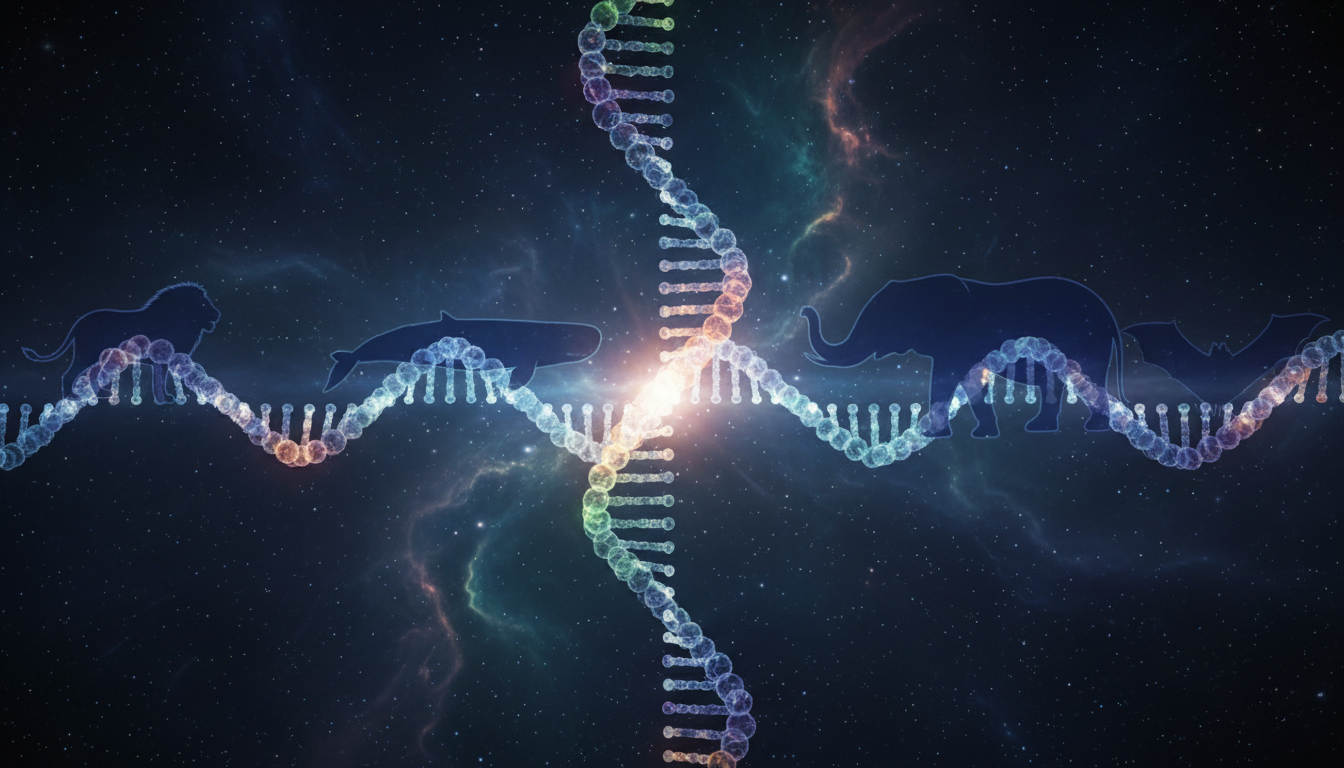
Aging Is Now Measurable Across Mammals, and That Changes Healthy Aging Strategy
A 2023 study in Nature Aging analyzed 11,754 DNA methylation profiles across 185 mammalian species and found that biological age can be estimated across tissues with high accuracy (r > 0.96). Combined with 2024 standards for studying cellular senescence in Cell and new reviews on oxidative stress and CRISPR, the latest aging research points to one central shift: aging is not one process, but a measurable network of molecular changes that may become increasingly trackable and, eventually, modifiable.
What Researchers Found
The strongest recent signal comes from epigenetic aging research. In Nature Aging, Ake T. Lu, Zhe Fei, Amin Haghani, and colleagues developed universal pan-mammalian DNA methylation clocks using samples from 59 tissue types across 185 mammalian species. These clocks estimated tissue age with striking accuracy, suggesting that aging leaves conserved molecular marks across mammals, not just in humans or lab mice.
DNA methylation refers to chemical tags on DNA that help regulate gene activity without changing the underlying genetic code. These marks shift with age in patterned ways. The key insight is that biological aging is not only visible through outward decline, such as reduced strength or slower cognition, but also through measurable changes in gene regulation.
Other 2023 and 2024 papers sharpen the picture. A review in Antioxidants by Edio Maldonado, Sebastián Morales, Fabiola Urbina, and colleagues summarized how oxidative stress intersects with the classic hallmarks of aging, including genomic instability, telomere shortening, mitochondrial dysfunction, loss of proteostasis, epigenetic alteration, and dysregulated nutrient sensing. Meanwhile, a 2024 paper in Cell by Mikołaj Ogrodnik, Juan Carlos Acosta, Peter D. Adams, and colleagues proposed guidelines for studying cellular senescence in vivo, reflecting how central senescent cells have become in aging biology.
Together, these studies suggest that healthy aging is moving from broad advice to measurable biology. Researchers are no longer asking only whether a person is aging well. They are asking which aging pathways are accelerating, in which tissues, and under what conditions.
Why This Matters for Healthspan
For healthspan, the practical shift is profound. If aging can be measured across tissues, then interventions can eventually be evaluated by whether they change biological aging signals, not just whether they improve cholesterol, glucose, or blood pressure. Those conventional markers still matter, but they may become part of a larger dashboard that includes epigenetic age, inflammatory load, mitochondrial function, and senescence burden.
This does not mean a single “anti-aging test” can yet tell someone exactly how long they will live or which intervention they need. The field is not there. But the research supports a more precise model of healthy aging: healthspan is the preservation of cellular function across systems, especially the brain, vasculature, muscle, immune system, and metabolism.
The 2024 Nature work on whole-brain annotation and multi-connectome cell typing in Drosophila adds another layer. By mapping thousands of neuronal cell types in the fruit fly brain, Philipp Schlegel, Yijie Yin, Alexander Shakeel Bates, and colleagues provided tools that may help researchers understand how neural circuits change with age. Model organisms remain essential because they allow scientists to connect genes, cells, circuits, and behavior at a level that is impossible in humans.
The Mechanism
Aging biology increasingly centers on loss of information and loss of resilience. DNA damage accumulates, epigenetic patterns drift, mitochondria become less efficient, proteins misfold, stem cell function declines, and immune signaling becomes more inflammatory. None of these pathways acts alone. They reinforce each other.
Oxidative stress is a useful example. Reactive oxygen species are not simply “bad.” At normal levels, they help cells signal and adapt to stress. But when production overwhelms repair systems, oxidative stress can damage lipids, proteins, and DNA. That damage can impair mitochondria, increase inflammation, disrupt proteostasis, and contribute to cellular senescence.
Senescent cells are another key mechanism. These cells stop dividing in response to stress or damage, which can be protective in wound healing and cancer prevention. The problem is persistence. Senescent cells can release inflammatory molecules, growth factors, and enzymes known collectively as the senescence-associated secretory phenotype. Over time, this can degrade tissue structure, impair repair, and contribute to chronic disease.
Epigenetic clocks capture part of this biology because methylation patterns reflect the regulatory state of the genome. A cell may have the same DNA sequence at age 70 that it had at age 20, but the way that DNA is packaged and expressed can be very different. This is why epigenetics has become one of the most active areas in longevity science.
CRISPR adds a future-facing dimension. In a 2023 Science review, Joy Y. Wang and Jennifer A. Doudna described how CRISPR genome editing has transformed the ability to identify and alter genes linked to disease. For aging, CRISPR is not a consumer longevity tool. Its importance is as a research platform and, in some cases, a therapeutic technology for genetic disease. It allows scientists to test causal pathways rather than only observe associations.
Context and Limitations
The major limitation is translation. Measuring biological aging is easier than proving that changing a biomarker extends healthy human life. Epigenetic clocks are powerful research tools, but different clocks measure different aspects of aging, and not all clock changes necessarily mean improved healthspan. Senescence biology is also complex because senescent cells can be harmful in one context and beneficial in another. The 2024 Cell guidelines exist partly because the field needs better standards before senolytic or senomorphic interventions can be interpreted confidently.
There is also a gap between mechanistic promise and clinical readiness. CRISPR, epigenetic reprogramming, senescence targeting, and mitochondrial therapies are scientifically exciting, but most remain experimental for aging itself. The best-supported healthspan strategies still come from interventions that improve metabolic, cardiovascular, musculoskeletal, and cognitive resilience.
Practical Implications
The latest research supports a practical approach: treat aging as a multi-system risk process, not a cosmetic problem or a single lab value. Readers interested in healthy aging may consider tracking and improving the inputs most consistently tied to better biological resilience.
Useful areas to prioritize include:
- Cardiorespiratory fitness, because mitochondrial function and vascular health are central to aging biology
- Muscle mass and strength, because skeletal muscle supports glucose control, mobility, and immune-metabolic health
- Sleep regularity, because repair, glymphatic clearance, hormonal rhythms, and immune regulation are sleep-sensitive
- Metabolic health, including waist circumference, blood pressure, glucose control, and lipid markers
- Inflammation control, through exercise, nutrient-dense eating patterns, periodontal care, and avoidance of smoking
- Cognitive and social stimulation, because brain aging is shaped by activity, learning, stress, and connection
- Periodic measurement, using validated clinical markers first, and emerging biological age tests cautiously
The research message is not that aging has been solved. It is that aging is becoming increasingly measurable, mechanistically understandable, and scientifically targetable. For now, the most defensible healthy aging strategy is to build physiological reserve while the next generation of biomarkers and therapies matures.